The first steps in a sewer backup
Your goal is to stop making it worse and protect people.
- STEP 01
Stop using water
Every flush and drain sends more into the pipe that is blocked. Tell everyone in the house.
- STEP 02
Keep people and pets away
Sewage carries bacteria. Keep children and animals out of the wet area.
- STEP 03
Protect belongings
Lift what you can off the floor, but do not wade through standing sewage in bare feet.
- STEP 04
Call the emergency line
Tell dispatch which drains are backing up and on which level.
- STEP 05
Photograph the damage
Take clear photos before any cleanup for your insurance claim.
When a sewer problem is an emergency
A slow drain is an annoyance. Sewage rising in a tub, shower or floor drain is a health issue. The water carries bacteria, and the cleanup rules are different from clean water damage.
Call urgently if sewage is entering the house, if several fixtures drain slowly at once, or if a wet, foul-smelling area has appeared in the yard. For a blockage without damage, start with sewer line cleaning and a camera, which tells you whether the pipe actually needs repair.
Common sewer line failures and fixes
The camera shows which one you have. This table shows the usual options.
| What the camera shows | Likely cause | Repair approach | Disruption |
|---|---|---|---|
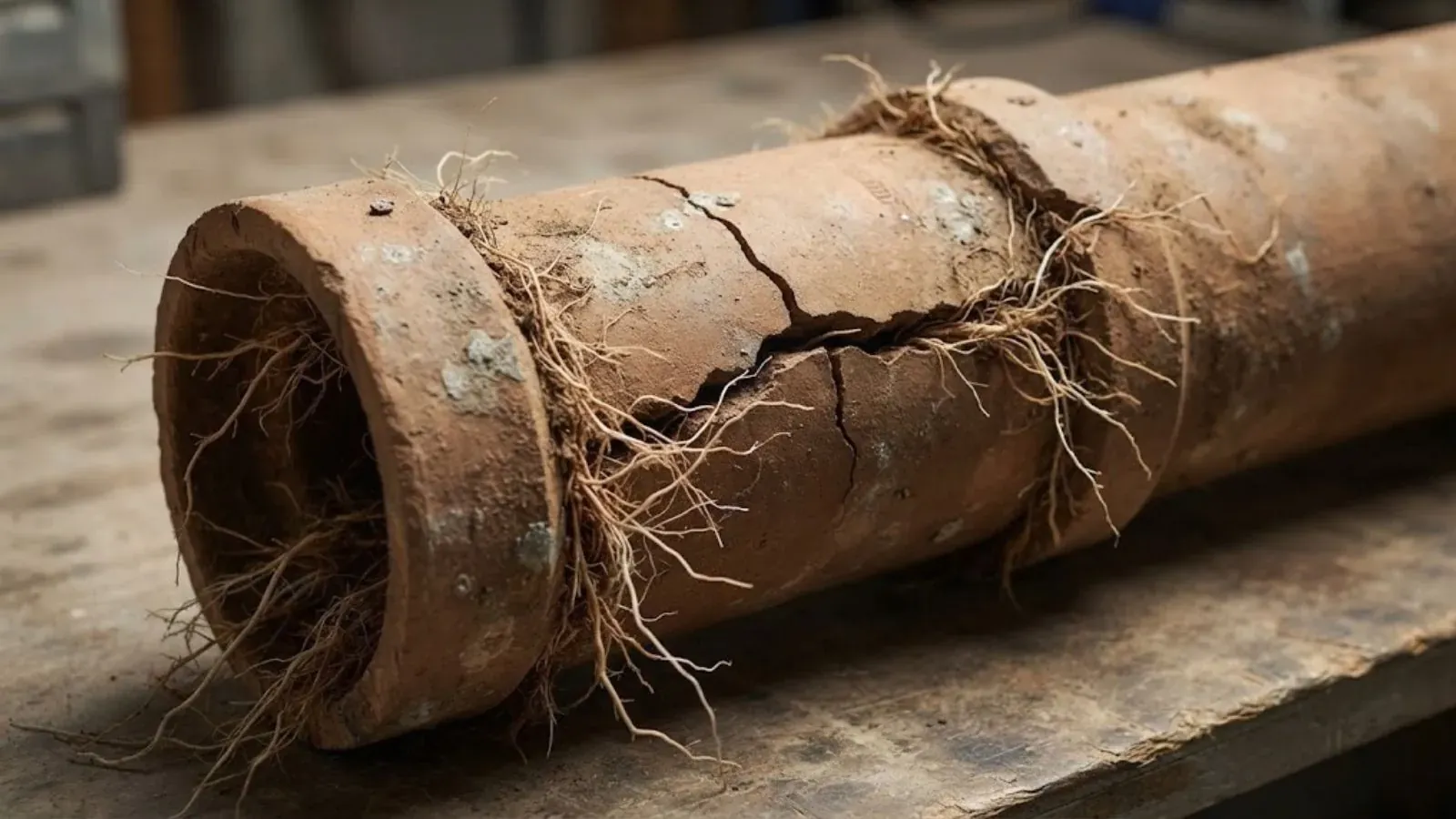
| Roots in joints | Roots seeking moisture at a joint | Cut roots, then line or repair the joint | Low to moderate |
| Cracked or broken pipe | Settling, age or heavy loads | Spot repair or section replacement | Moderate |
| Offset joint | Soil movement | Dig and re-seat, or line the pipe | Moderate |
| Belly or sag | Soil washout under the pipe | Dig and re-bed the section | Moderate to high |
| Collapsed pipe | Corrosion or crushing | Replace the section or the lateral | High |
| Old cast iron or clay scaling | Age | Trenchless lining or full replacement | Low to high |
Whether the pipe can be lined instead of dug depends on its diameter, its shape and how badly it has deformed.
Repair day: what to expect
Most sewer repairs follow the same pattern after the camera work is done.
- STEP 01
Locate and mark
The camera locates the defect and the plumber marks the depth and the position on the surface.
- STEP 02
Choose dig or trenchless
You see the footage and the options. Trenchless methods are chosen where the pipe shape allows.
- STEP 03
Repair the pipe
The damaged section is exposed and replaced, or lined from inside the pipe.
- STEP 04
Test and restore
The new section is tested, the trench is backfilled and the area is left ready for landscaping.
Cleanup and health precautions
After the water is stopped and the line cleared, these steps matter:
- Wear rubber boots, waterproof gloves and eye protection when you handle anything that touched sewage.
- Remove wet carpet, padding and porous materials within a day or two, since they cannot be cleaned reliably.
- Wash hard surfaces with a household disinfectant, and ventilate the area.
- Call a restoration company if more than a small area is affected, or if drywall is wet.
- Keep food and dishes away from the affected room until it is disinfected.
These steps are general. For large backups or anyone with a weakened immune system in the home, call a professional.
Before the plumber digs
A few preparations avoid surprises:
- Call 811 before anyone digs. North Carolina requires utilities to be marked, and the call is free.
- Ask whether the camera found the lateral's cleanout and where the property line runs.
- Move vehicles, sprinkler heads and anything else off the path of the trench.
- Ask the plumber who restores the lawn, driveway or walkway afterward.
- Keep the camera video so you have a record for insurance or a future buyer.
Who owns which part of the sewer
Charlotte Water's guidance says that when a backup comes from the public sewer pipe or a manhole, the utility locates and clears the blockage, including the city-maintained part of your connection. If the problem is inside your private plumbing, the utility says it cannot take responsibility for the blockage or the repairs.
That means the first call can be to either of two parties. Find the cleanout on your property and check whether the main pipe beyond it is flowing. If the cleanout is full and the problem is clearly past it toward the street, call Charlotte Water at 311 before you hire a repair, since the fix may fall to the utility.
Sewer lateral work, including slope, cleanouts and pipe materials, follows the state plumbing code, which is the International Plumbing Code (IPC) with North Carolina amendments. A repair that skips the slope is a repair that will clog again.
Trees, soil and why laterals fail
Huntersville lots often hold mature oaks, pines and sweetgums that drop roots toward any joint that leaks moisture. Roots do not break a sound pipe. They find a hairline gap and then widen it.
Clay soil common to the Piedmont swells when wet and shrinks when dry, and that movement can shift pipe joints over the years. A camera inspection after a root cut-out tells you whether the repair is a one-time fix or a sign the pipe needs replacing.
What drives the cost of a sewer repair
This is among the widest-ranging plumbing jobs, so the scope has to be established first.
- Length and depthLonger and deeper lines take more time and more restoration.
- MethodSpot digs, trenchless lining and full replacement differ sharply in cost.
- Surface in the wayA driveway, a mature tree or a deck over the line adds work.
- PermitsSewer work may need a permit, and Mecklenburg County Code Enforcement at 980-314-2633 can confirm.
- After-hours timingEmergency dispatch costs more than a scheduled visit, so stabilize first if you can.
Homeowners insurance usually excludes the cost to repair a worn sewer pipe, though some policies offer an add-on for sewer line coverage and others cover resulting interior damage. Ask your carrier before you commit.
Want your real number? Call (704) 951-1635 and describe the job.
Sewer Line Repair questions in Huntersville
Yes. Call the 24/7 line and tell dispatch which fixtures are backing up. We send a plumber with a cable machine and a camera.
Find your cleanout. If the cleanout is full and you suspect the blockage is past it toward the street, call Charlotte Water at 311. If the cleanout is dry, the blockage is likely inside your house line.
Often not. Trenchless lining and spot repairs avoid long trenches when the pipe shape allows. The camera tells us whether it does.
It can be. Sewage carries bacteria and viruses. Keep people and pets away, wear protection if you must enter, and disinfect hard surfaces afterward.
Many standard policies exclude sewer backup unless you have an endorsement. Check your policy, document everything and ask before you start cleanup.
No. It does not clear a main line and can harm the plumber and the pipe. Leave it to the equipment.
It depends on the material and the soil. Cast iron and clay pipes from older homes can fail sooner than newer PVC, and a camera shows the real condition.
Avoid contact. Sewage carries bacteria. Wear boots and gloves if you must enter, ventilate, and call a remediation company for anything beyond a small area.
Tell us what is backing up and we will walk you through the safe first steps. Call (704) 951-1635.