What the camera actually shows
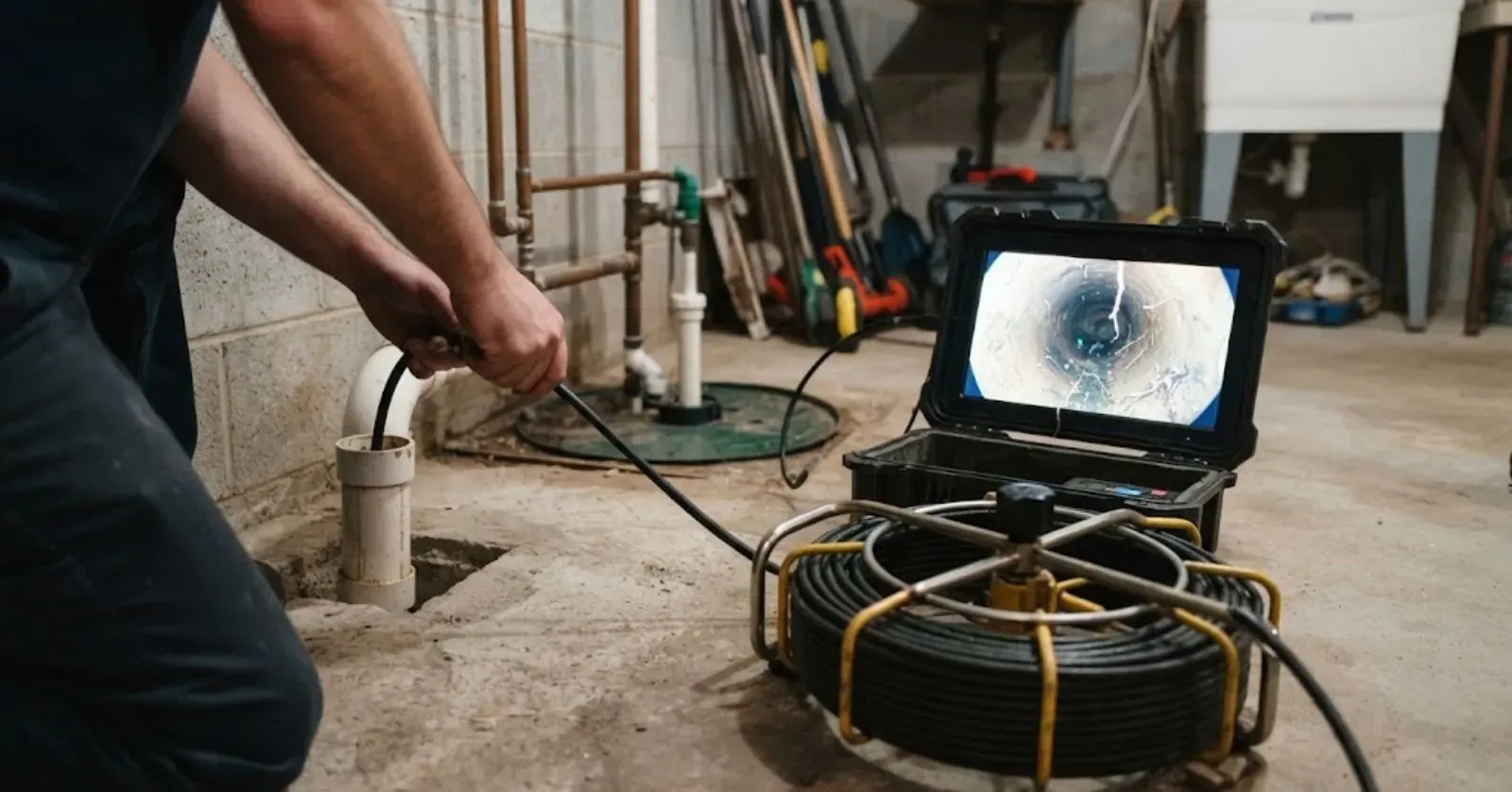
A sewer scope head carries a light and a lens, and the cable tells the operator how far it has traveled. The monitor shows the inside of the pipe in real time, and a locator on the surface marks the camera position and depth.
That lets the plumber point to a specific spot, such as a cracked joint twenty-two feet from the cleanout at three feet deep, instead of saying the line has a problem somewhere. A repair priced from that information is a repair you can compare honestly.
What the footage can tell you
Each finding has a typical meaning and a typical next step.
| On screen | What it means | Typical next step |
|---|---|---|
| Roots entering at a joint | A joint has opened enough to let roots in | Cut roots, then line or repair the joint |
| Standing water in a section | A belly or sag where waste collects | Re-bed the section, or monitor if it is minor |
| Cracked or fractured pipe | Soil movement, age or a heavy load | Spot repair or lining |
| Offset joint | Two pipe ends no longer line up | Dig and re-seat, or line the pipe |
| Scale or heavy grease coating | Buildup narrowing the pipe | Hydro jetting |
| Clean, smooth pipe | The problem is not the lateral | Look at branch lines, vents or fixtures |
The recording, not the plumber's description alone, is what makes a repair quote easy to verify.
When an inspection is worth doing
These situations are the usual reasons to run a camera:
- You are buying a house older than about 25 years, or one with mature trees near the sewer route.
- A main line has backed up more than once in a year.
- Several drains are slow and a cable pass did not fix them for long.
- A wet or sunken patch has appeared in the yard.
- You plan a big renovation, a pool or an addition over the sewer path.
How the inspection works
A typical inspection takes about an hour for a standard lot.
- STEP 01
Locate access
The plumber finds the cleanout, or pulls a toilet or uses a roof vent if there is none.
- STEP 02
Run the camera
The camera travels to the street connection while the operator narrates and records.
- STEP 03
Mark defects
Each defect is located on the surface, and depth and distance are noted.
- STEP 04
Review and deliver
You watch the key moments, get the recording and a written note of findings, and hear the options.
Cleanouts, the right-of-way and the utility connection
Charlotte Water takes responsibility for blockages in public sewer pipes and manholes, including the city-maintained section of your connection. Defects in the private lateral are the owner's responsibility.
The camera shows where the private line ends and the public connection begins. If the problem sits in the public part, you hand the footage to Charlotte Water instead of paying for a repair. The utility can be reached at 311 or 704-336-7600.
A camera inspection does not need a permit by itself, but any repair it leads to falls under the state plumbing code, the International Plumbing Code (IPC) with North Carolina amendments. Keep the footage so you can point to the exact defect.
Using the footage when you buy or sell a home
A home inspection typically does not scope the sewer lateral unless the buyer asks. A camera inspection during the due diligence period can reveal a defect that gives you grounds to negotiate repair credits.
Sellers can use the same recording to show that the line is sound. Keep the video file and the findings note with the house records so the next owner starts with facts.
What affects the cost of a camera inspection
The inspection price is separate from any cleaning or repair.
- AccessA cleanout makes the job short. Without one, the plumber needs more time to reach the line.
- Length of the lateralA long run to the street takes longer than a short one.
- Locating and markingMarking depth and position on the surface adds time.
- Cleaning firstA heavily clogged line may need cleaning before the camera can pass.
- Report and recordingA written findings note and a copy of the video are part of the scope.
Insurance seldom pays for an inspection by itself. Some policies with sewer endorsements help after a covered loss, so ask your carrier when a claim is involved.
Want your real number? Call (704) 951-1635 and describe the job.
Sewer Camera Inspection questions in Huntersville
A standard inspection usually takes about an hour once the camera is in the line. Cleaning first, or reaching a hard-to-find cleanout, adds time.
Yes. You should always receive the recording and a short written note of what was found.
It can see the private lateral up to the connection with the public main, unless water or a collapse stops it. The plumber tells you where the footage ends and why.
For a home older than a couple of decades, or with large trees near the sewer line, it is a sensible check. It can reveal defects that a standard home inspection does not look for.
It means the lateral is in good shape. Slow drains can still come from a branch line, a vent problem or a fixture, which a plumber can check next.
Yes. A follow-up camera pass after a repair or a lining confirms the line is smooth and flowing.
Tell us why you want the inspection and we will outline what it covers. Call (704) 951-1635.