What makes commercial plumbing different
A commercial building has more fixtures, longer runs, larger pipes and more people depending on the system. A failure in a restaurant means closing the kitchen. A failure in an office means closing a floor. A leak in a multifamily building can affect several units at once.
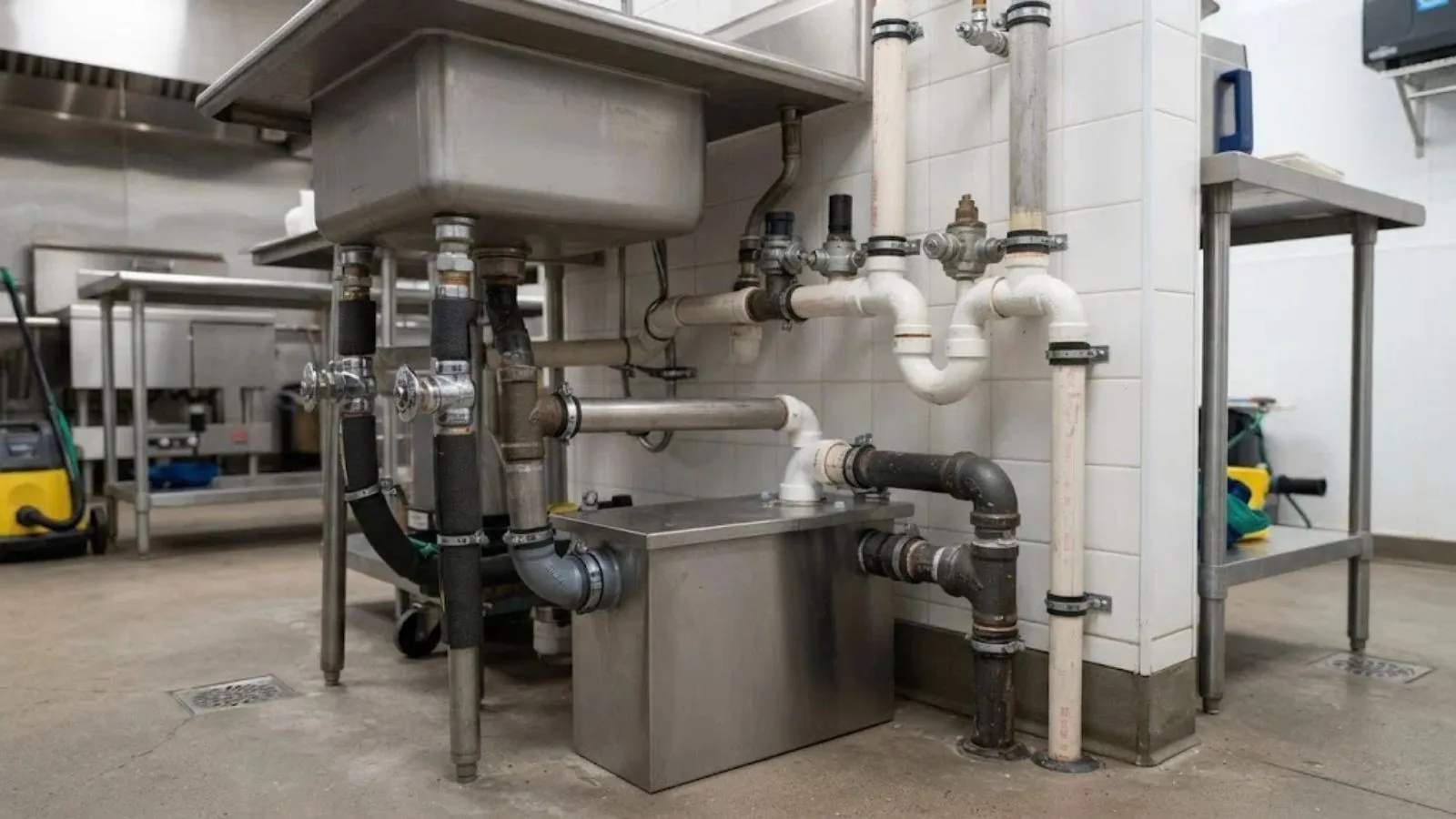
The work also involves different equipment: grease traps, floor drains, commercial water heaters, backflow assemblies, flushometer toilets and larger drain lines. A residential plumber with the right training can handle many of these, but the scope and the code requirements need planning.
Common commercial plumbing needs
Different property types stress different systems.
| Property type | Frequent issues | Typical service |
|---|---|---|
| Restaurant or food service | Grease clogs, floor drain backups, water heater failure | Jetting, drain cleaning, heater repair |
| Office building | Restroom clogs, leaking flushometers, supply leaks | Fixture repair, leak detection |
| Retail and strip center | Shared main backups, water heater issues | Mainline cleaning, camera inspection |
| Multifamily | Stack backups, leaks between units, water heater failures | Sewer line service, pipe repair |
| Medical or dental office | Water quality, backflow, tight uptime | Scheduled maintenance, backflow testing |
| Small industrial | Floor drains, process water, large heaters | Drain service, heater replacement |
Tell dispatch about building size, the main shutoff location and how many people are affected.
What property managers should have ready
A short file speeds up any emergency call:
- The location of the main shutoff, the water heater and each floor drain cleanout.
- A drawing or photos of the plumbing room and riser layout.
- A list of tenant contacts and after-hours access instructions.
- Last service dates for grease traps, backflow assemblies and water heaters.
- Insurance carrier and policy contact for water damage claims.
Keeping the file in one place, shared with the building engineer, saves time at the moment it matters.
What to do before the plumber arrives
Staff can limit damage in the first minutes:
- Close the main shutoff or the zone valve, and tell anyone on site what you are doing.
- Move customers and staff away from wet floors, and put up a sign or cones.
- Do not use equipment or outlets that stand in water, and switch off power at the breaker only if you can reach it dry.
- Do not run a restroom group or a kitchen sink that is backing up.
- Photograph the problem and note the time for your insurer.
How a commercial call is handled
The response sequence limits downtime.
- STEP 01
Triage by phone
Dispatch confirms the building type, the water source and whether the water can be shut off.
- STEP 02
Stabilize on arrival
The plumber stops the damage first, whether by shutting a valve or clearing a main.
- STEP 03
Diagnose the cause
The system is tested, and a camera is used when a drain is involved.
- STEP 04
Repair and report
The repair is done or scheduled, and you receive a written summary for the property file and the insurer.
Grease, backflow and the utility
Charlotte Water asks customers not to pour grease, fats and oils down drains, and food service businesses commonly need grease traps maintained to keep their lines clear. Ask the utility or your plumber how your property's grease management obligations work.
Commercial water service often involves backflow prevention assemblies. Whether yours needs periodic testing, and how often, is set by the utility's program. Call Charlotte Water at 311 or 704-336-7600 to ask what applies to your account.
Commercial plumbing is built to the same state plumbing code as homes, the International Plumbing Code (IPC) with North Carolina amendments, but fixture counts, backflow devices and grease interceptors add requirements for restaurants and larger buildings. Ask the plumber what applies to your occupancy.
Planned maintenance saves emergency calls
Most commercial plumbing emergencies come from items that could have been caught earlier: a grease line that was never jetted, a water heater past its life, a supply valve that no one had exercised in years.
A maintenance plan can include scheduled jetting, camera checks, water heater flushing and valve exercising. Many businesses start with a single visit to walk the building and note risks, then decide what a schedule should include. Call us to talk through your building.
What affects the cost of commercial plumbing
Commercial work is scoped to the building, not to a price per fixture.
- Size and complexityPipe size, number of fixtures and access determine the labor.
- EquipmentLarge jetters, lifts and commercial heaters differ from residential tools.
- HoursAfter-hours work to avoid business downtime costs more.
- Permit and codeCommercial work often has stricter code and inspection needs.
- Parts and lead timeCommercial water heaters and fixtures can have longer lead times.
Commercial property policies often cover sudden water damage and sometimes business interruption, but not wear and tear. Call your carrier and document the loss.
Want your real number? Call (704) 951-1635 and describe the job.
Commercial Plumbing questions in Huntersville
Yes. Call the 24/7 line and tell dispatch the building type and what is affected.
Many jobs can be scheduled before opening or after close. Tell us your hours when you call.
Yes. We clear grease clogs and jet lines. For grease trap pumping, ask about local requirements and your pumping schedule.
Yes, including stack backups and leaks that affect more than one unit. Tell us how many units are affected.
Yes. We give a written summary of what was found and what was done.
Ask the utility what is required for your account and who is certified to test. We can tell you whether we handle the work for your assembly.
Describe the building and the problem and we will line up the right plumber. Call (704) 951-1635.