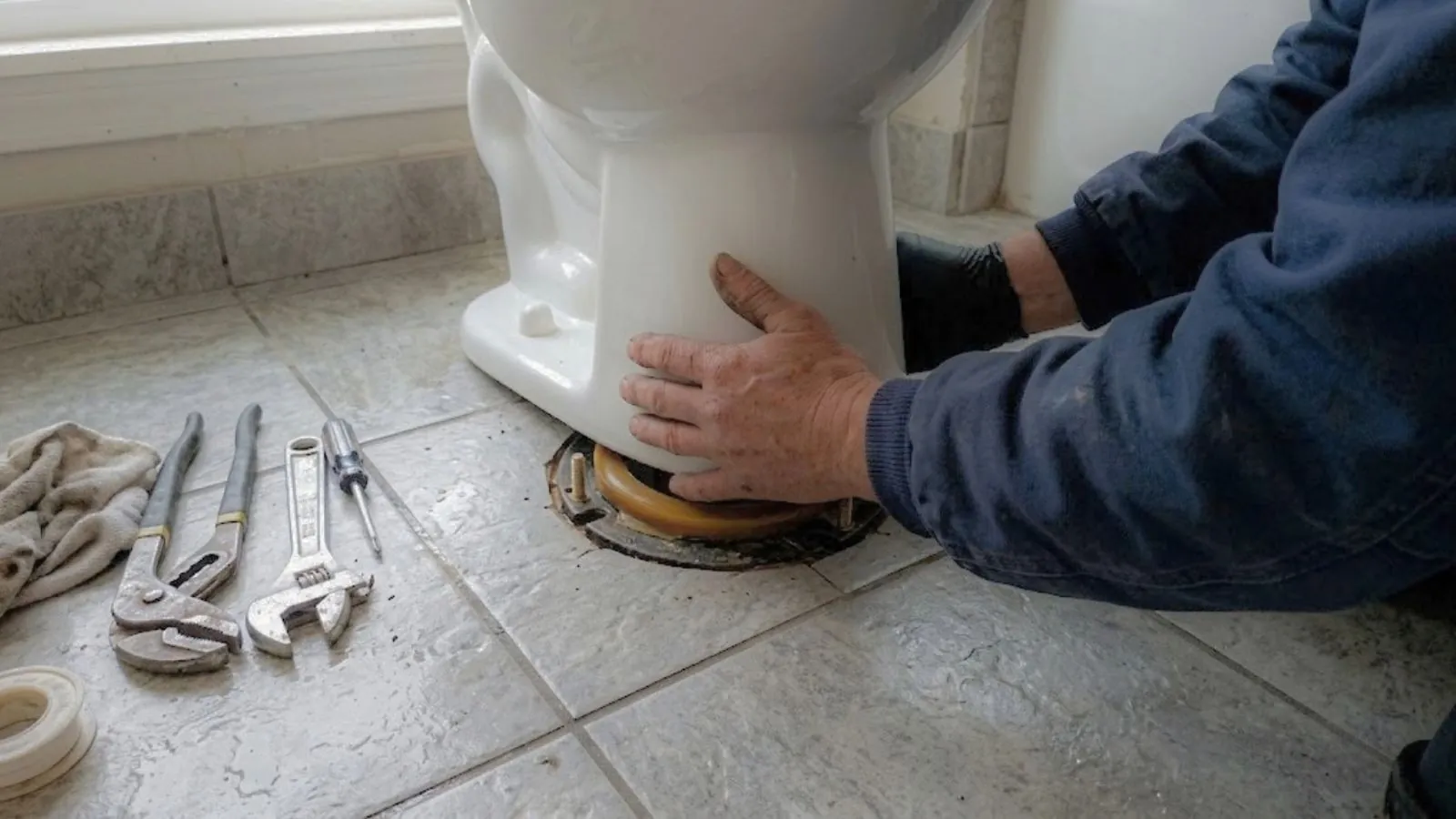
One clog or a pattern
If a toilet clogs once after a party or a bout of illness, the cause is obvious and a plunger fixes it. If it clogs once a month with no obvious reason, the cause is built into the toilet or the pipe behind it.
Keep a note of when it happens and what was flushed. Add whether other drains were slow at the time. Those three facts let a plumber narrow the cause in minutes.
Causes, signs and fixes
Use the signs to match your toilet to the likely cause.
| Cause | Signs | Typical fix |
|---|---|---|
| Too much paper or waste at once | Clogs after heavy use, clears with a plunger | Flush twice, use less paper |
| Wipes and non-flushables | Frequent clogs, a ragged mass on the auger | Stop flushing them, clear with an auger |
| Partial blockage in the trap | Slow flush, gurgling, repeat clogs | Closet auger, then a camera if it persists |
| Clogged rim jets or low water level | Weak flush with a normal drain | Clean the jets, adjust the tank level |
| Restricted vent | Gurgling in other drains, slow drainage everywhere | Clear the vent stack |
| Main line or branch problem | More than one fixture is slow or backs up | Drain cleaning or sewer line repair |
Plunging a toilet that is part of a larger drain problem only moves the water around.
What not to flush
Many clogs begin with something that should have gone in the trash:
- Wipes of any kind, including those labeled flushable.
- Paper towels, tissues and cotton balls.
- Feminine products, swabs and dental floss.
- Cat litter, even types marketed as flushable.
- Grease, which hardens in the trap and the drain.
Paper towels and wipes do not break down the way toilet paper does. They gather at the first bend and make a net that traps everything else.
A safe way to clear a clog yourself
Try this order before you call.
- STEP 01
Stop the water
If the bowl is rising, lift the tank lid and close the flapper, or turn the supply valve behind the toilet.
- STEP 02
Use a flange plunger
A plunger with a flange seals better than a flat cup. Push slowly and pull firmly, ten times.
- STEP 03
Try a closet auger
A closet auger reaches the trap without scratching the porcelain.
- STEP 04
Skip the chemicals
Drain chemicals can burn skin and damage the pipe. They rarely clear a toilet clog.
- STEP 05
Call if it repeats
A second clog within days points to something past the trap.
Low-flow toilets and what really changed
Modern toilets use less water per flush than older models. A well-designed modern toilet clears waste well, but a poorly designed or aging one may struggle. If a toilet has always been a problem, the problem may be the model and not the pipe.
A plumber can tell you whether the toilet is working as designed. If it is not, a replacement toilet with a larger trap and a strong flush is an inexpensive fix compared with repeated service calls. See toilet repair for how we decide between repair and replacement.
When the clog is in the drain behind the toilet
A toilet connects to a drain that runs to the main line. If roots, grease or a belly in that drain slow the flow, every flush starts to push water more slowly, and the toilet clogs more easily. You may notice gurgling in the tub or the sink at the same time.
A camera shows what is wrong. Many drain problems can be fixed by cleaning the line, and some need a spot repair. A plumber who finds a fixable problem saves you from replacing a toilet that was never the issue.
Huntersville note: who owns the blockage
Charlotte Water serves Huntersville, Cornelius and Davidson. Its guidance says that if a backup is in your private internal plumbing, the utility cannot take responsibility for the blockage or the repairs. If the blockage is in a public manhole or public sewer pipe, Charlotte Water locates and clears it, including the city-maintained part of your connection.
That affects what you do after a clog. If only your toilet is stopped, it is a private issue. If your neighbors also have backups, call Charlotte Water at 311 or 704-336-7600 and report it, since it may be a public line. See our Cornelius page for the same advice for homes there, and the service areas page for towns we cover.
Toilet flanges and drain slope are covered by the state plumbing code, the International Plumbing Code (IPC) with North Carolina amendments. A toilet that clogs because a drain has no slope is a code problem, and a plumber can show you the grade.
Kids, guests and rentals
Households with young children, frequent guests or short-term renters see more clogs. Children flush toys and too much paper, and guests do not know the house's quirks. A short sign and a bathroom bin reduce clogs more than any tool.
If you manage a rental, a camera inspection of the main line before a new tenant moves in is a small cost compared with a backup in the first month.
Prevention that works
Keep a small trash can with a lid in every bathroom so that wipes and products go in the bin and not the bowl. Use a moderate amount of toilet paper. If you have children, teach them what goes down.
If you own an older toilet that clogs, consider replacing it before it fails completely. And if a drain smells or gurgles, address it early. Small problems in the line become sewer backups when they are ignored.
Huntersville questions: Why toilets clog
A partial blockage in the trap, a weak flush or a slow drain behind the toilet can cause clogs from normal use. A closet auger and a camera help find which.
They do not break down the way toilet paper does, and they are a common cause of clogs and backups. Put them in the trash.
Yes. That suggests the main line or a shared branch. Stop using water and call a plumber.
A flange plunger used gently is safe. Forcing a clog with a snake or a plunger can scratch porcelain or push the clog deeper.
Charlotte Water clears blockages in public sewer pipes and manholes. A blockage in your private plumbing is the owner's responsibility.
If only one toilet is affected and the others drain well, the toilet or its branch is the likely issue. If several fixtures are slow, the main line is suspect.
Tell us how often the toilet clogs and what else is slow, and we will point you to the cause. Call (704) 951-1635.