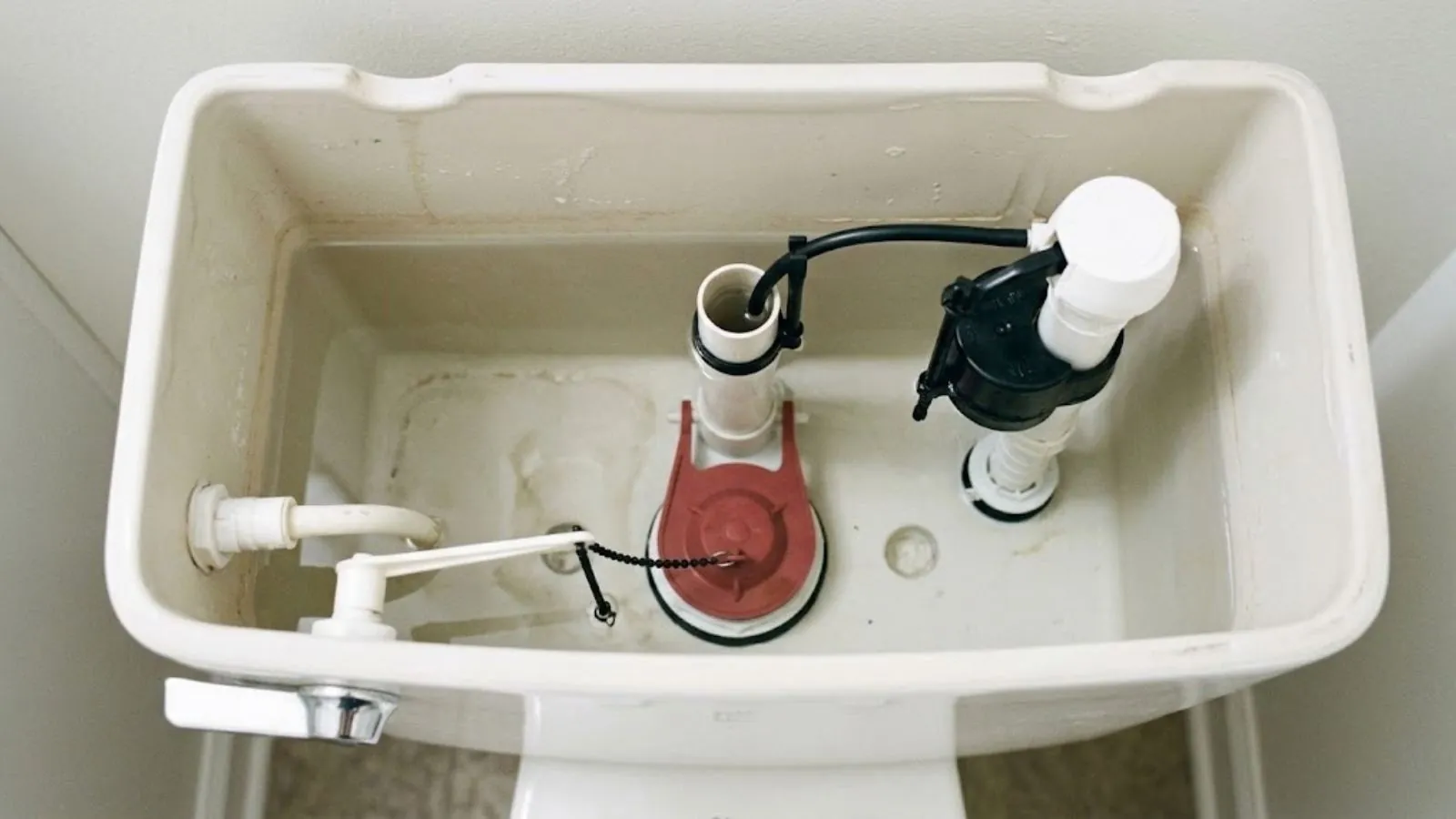
What each toilet symptom usually means
Most toilet repairs are one of these.
| Symptom | Usual cause | Typical fix |
|---|---|---|
| Runs constantly | Worn flapper or a bad fill valve | Replace the part |
| Phantom flush, refills on its own | Flapper leaks slowly into the bowl | New flapper, check the chain length |
| Weak flush | Clogged rim jets or a low water level | Clean the jets, adjust the level |
| Water at the base of the toilet | Failed wax ring or loose closet bolts | Reset the toilet with a new ring |
| Wobbles when you sit | Loose bolts or a damaged flange | Tighten, shim or repair the flange |
| Clogs often | Partial clog in the trap or the branch drain | Auger, then drain cleaning |
A new fill valve or flapper is among the cheapest repairs in the house, and it can save water every month.
The running toilet: the quiet water waster
A running toilet looks harmless, but a flapper that leaks a thin stream can waste a great deal of water over a month without anyone noticing. The cost shows up on the water bill, not on the toilet.
To check, add a few drops of food coloring to the tank and wait 15 minutes without flushing. If color appears in the bowl, the flapper is leaking and needs replacing. If the tank overflows into the overflow tube, the fill valve or the float needs adjusting.
What to do before the plumber arrives
If a toilet is overflowing or leaking, do these first:
- Close the supply valve behind the toilet by turning it clockwise.
- Lift the tank lid and close the flapper if the bowl is still rising.
- Do not flush again, and keep children and pets out of the wet area.
- Put towels around the base and turn off power to any outlet that sits in the water.
- Wear gloves if the water is from a backed-up drain, and photograph the damage.
What a toilet repair visit includes
The visit is organized to find the real cause.
- STEP 01
Test the flush
The plumber flushes the toilet, watches the fill and listens for leaks.
- STEP 02
Check the supply
The shutoff valve and the supply line are checked for drips and corrosion.
- STEP 03
Replace or reset
Failed parts are replaced, or the toilet is lifted and reset with a new wax ring.
- STEP 04
Test again
The toilet is flushed several times and checked for leaks at the base and the tank.
When to replace the toilet instead of repairing it
A new toilet may be the better choice when:
- The tank or bowl has a crack, which cannot be repaired.
- The toilet has needed multiple repairs in a short time.
- It uses far more water than a modern model, which affects the bill.
- It is a comfort-height or accessibility upgrade you want anyway.
- The porcelain is stained or the finish has worn away.
A modern water-efficient toilet meets federal flow standards, and many carry the EPA WaterSense label.
Water and sewer charges in Huntersville
Water and sewer bills for Huntersville customers come from Charlotte Water, and sewer charges commonly track the water that goes through the meter. A running toilet therefore raises both parts of the bill.
If a bill jumps with no change in how many people live in the house, check the toilets first. Fixing a leaking flapper is the lowest-cost step in the leak checklist on our leak detection page.
Toilet flanges, closet bolts and wax rings are covered in the state plumbing code, which is the International Plumbing Code (IPC) with North Carolina amendments. A toilet reset on a damaged flange should include repairing the flange, not only a new wax ring.
Clogs, wipes and what can go down
Toilets are designed to handle waste and toilet paper. Wipes marketed as flushable, paper towels, cotton swabs and feminine products do not break down fast enough and gather at the trap or the first bend in the drain.
If a plunger does not clear the clog after a few tries, stop. Continued plunging can force waste further into the line. A closet auger reaches the trap. If more than one fixture is slow, the clog is farther down the drain.
What affects the cost of toilet work
A part swap is a small job. A replacement or a floor repair is larger.
- The part or the unitA flapper costs little. A new toilet costs more, and the model changes the price.
- The flange and the floorA rotted subfloor under a leaking toilet turns a small job into a carpentry job.
- Supply valve and lineOld shutoffs that will not close need replacing before the repair.
- Clog depthA trap clog is simple. A deeper clog is a drain cleaning job.
- Removal and disposalHauling away the old toilet is included in a replacement.
Insurance does not usually cover worn toilet parts. If a leak damaged the floor, the water damage may be covered, so photograph it and ask your carrier.
Want your real number? Call (704) 951-1635 and describe the job.
Toilet Repair questions in Huntersville
Usually the flapper at the bottom of the tank is leaking slowly into the bowl, and the fill valve tops it up. Replacing the flapper fixes most cases.
Treat it as soon as you can. Water under a toilet can rot the subfloor. Shut the supply valve and call.
It is possible, but the toilet is heavy and the flange must be in good shape. A plumber also checks the floor for rot.
A well-built porcelain toilet lasts a long time. The internal parts wear out sooner, often within years, and they are cheap to replace.
The trap may be partly blocked, the vent may be restricted or the drain behind it may have buildup. A plumber can scope it.
Yes. Tell us about the rough-in distance and whether you want a standard or comfort-height model.
Tell us what the toilet is doing and we will say what is likely wrong. Call (704) 951-1635.