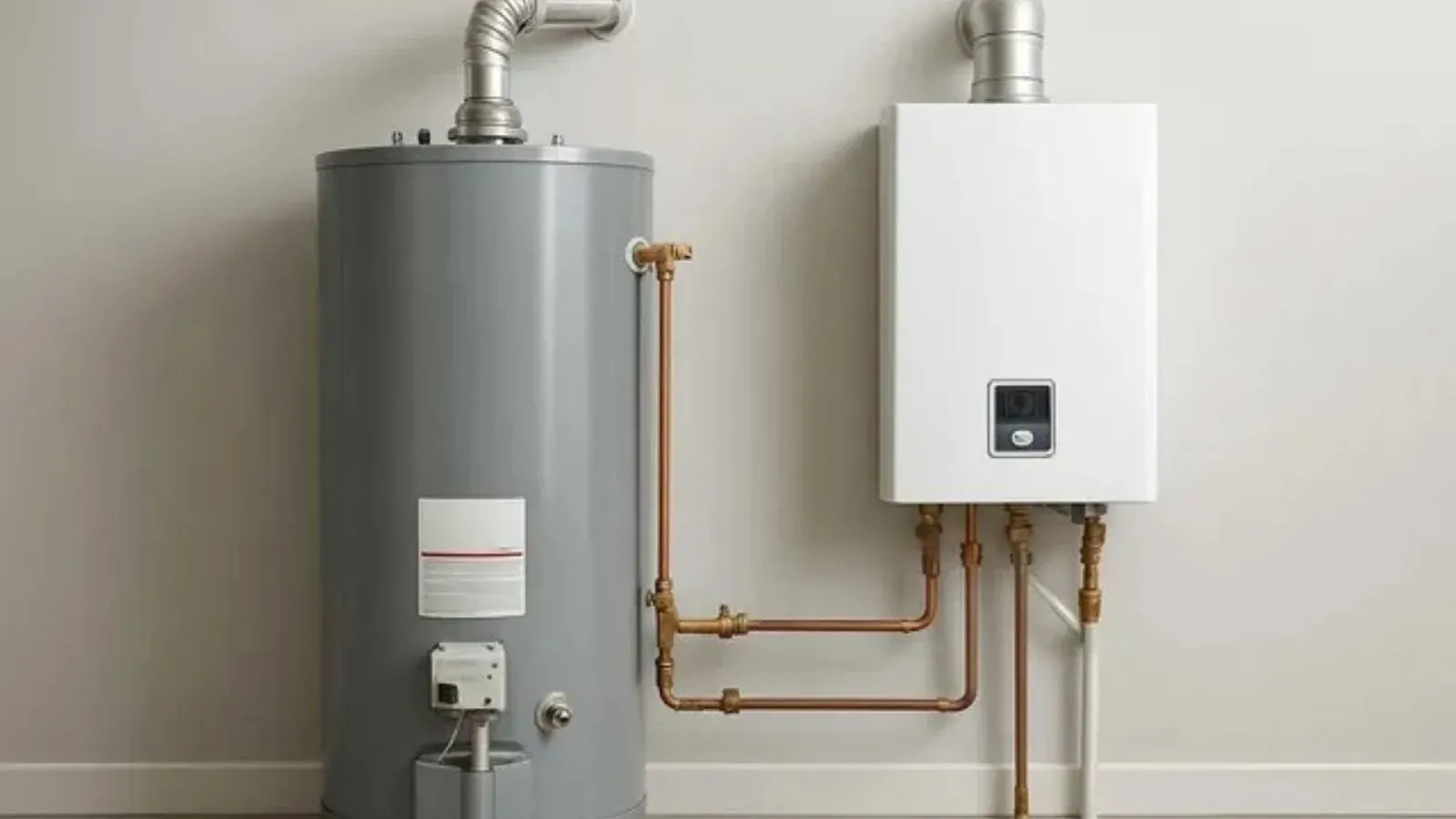
Installation is a design decision, not a swap
Replacing a failed tank is mostly mechanical. Installing a heater where none stood before, or moving one, is a design problem. It touches gas supply, venting, electrical capacity, drain access and floor loading.
Planning pays off. A heater placed near the fixtures it serves delivers hot water faster and wastes less water waiting at the tap. A heater placed far away because the old spot was convenient for the builder often wastes both.
Installation scenarios and what each one involves
The scope changes with the situation. Here are the common ones.
| Scenario | Plumbing work | Other trades or approvals |
|---|---|---|
| New construction | Supply, drain, vent and gas rough-in before drywall | Inspection stages tied to the building permit |
| Moving the heater | New supply and return runs, a new vent path, a new drain pan | Permit and possibly a new circuit or gas branch |
| Switching gas to electric | Cap the gas line, update the vent, add a pan | A dedicated 240-volt circuit from an electrician |
| Switching tank to tankless | Resize the gas line, new venting, condensate drain | Gas and venting inspections |
| Adding a second heater | Manifold or parallel plumbing and a second relief line | Capacity check on the gas or electrical service |
| Garage to closet relocation | Longer runs, new vent, thermal expansion control | Check clearance and combustion air |
Permit rules vary by job and address. Mecklenburg County Code Enforcement answers permit questions at 980-314-2633.
Questions to settle before the install day
A short planning call saves hours on site:
- Where will the heater go, and can the old one be reached to drain and remove?
- What fuel is available at that spot, and what does the vent route look like?
- How many people use hot water at once, and which fixtures are the largest users?
- Is there a floor drain or a clear path for a pan drain line?
- Do you want to leave room for a recirculating loop or a water treatment device later?
From call to hot water
Planned installs follow a clear sequence.
- STEP 01
Walk-through
The plumber looks at the site, reads the gas and electrical service, and measures clearances.
- STEP 02
Written scope and price
You get the unit type, the code items and the total before work is scheduled.
- STEP 03
Install day
The new heater is set, connected and vented, the relief line is piped to a safe discharge and the system is pressure-tested.
- STEP 04
Run and review
The unit is fired and checked, and you get a quick tour of the shutoffs and the temperature setting.
If you smell gas: do this, in this order
Natural gas and propane are flammable. Act before you diagnose.
- STEP 01
Leave immediately
Get everyone, including pets, out of the house. Do not stop to collect belongings.
- STEP 02
Do not create a spark
Do not flip switches, use a lighter, start a car in the garage or use a phone inside.
- STEP 03
Call from outside
Call 911 or your gas utility's emergency number from a safe distance.
- STEP 04
Stay out
Do not go back inside until the utility or fire department says it is safe.
- STEP 05
Call us for the repair
After the area is cleared, call our line to arrange a licensed plumber for the line or appliance repair.
Safe temperature and efficiency settings
Most households run comfortably with the thermostat set around 120 degrees Fahrenheit, a setting the U.S. Department of Energy suggests for savings and scald safety. Households with young children or older adults should lean toward that number.
Insulating the first few feet of hot and cold piping near the heater costs little and cuts standby loss. Ask the plumber to add it during the install while the pipes are exposed.
Sizing for Huntersville homes
Huntersville grew from 3,014 residents in 1990 to 61,376 in 2020, so many homes here were built with a single standard tank sized for the average family of the time. Families that have grown, added a second primary bath or installed a soaking tub often outgrow that tank.
If that describes your house, discuss recovery rate with the plumber, not only tank volume. A slightly larger tank, a faster-recovering gas unit or a tankless unit can fix the shortage that a same-size swap would repeat.
A new install is measured against the state plumbing code, the International Plumbing Code (IPC) with North Carolina amendments. Ask the plumber to name the pan, relief line and venting details the inspector will look at before the day of the install.
What goes into an installation price
Installs vary more than replacements because the scope varies.
- The unit itselfTank, tankless and heat pump units sit at very different price points.
- Gas, electric and venting workNew lines, a new circuit or a new vent route can cost more than the heater.
- Code itemsPans, relief piping, expansion control and gas shutoffs are listed separately.
- Permit and inspectionFees and the plumber's time to meet an inspector are part of the job.
- SchedulePlanned installs let you avoid after-hours pricing.
Insurance rarely pays for planned upgrades. It may respond to sudden water damage if the new install fails, so keep your paperwork.
Want your real number? Call (704) 951-1635 and describe the job.
Water Heater Installation questions in Huntersville
Yes. We coordinate rough-in before drywall and final connection after. Ask your builder which inspection stages apply to your permit.
Mecklenburg County says plumbing installation, extension, alteration or general repair requires a permit. Call Code Enforcement at 980-314-2633 for the rule that applies to your address and job.
Look at the fuel already at the house, the vent path and your utility rates. A plumber can add up the extra work if you switch.
A pan catches leaks under a heater and drains to a safe spot. Heaters in attics, upstairs closets and finished spaces usually need one.
Yes. Moving a heater means new supply lines, a new vent route and a drain path. It is priced as a project, not a swap.
Failed tanks are handled as emergency replacements. If your heater is dead, call the 24/7 line and ask about emergency water heater replacement.
Leave at once, avoid creating sparks and call 911 or your gas utility from outside. Do not go back in until it is cleared.
It can be. A yellow or orange flame may mean incomplete combustion, which makes carbon monoxide. Have the appliance checked.
Send us your layout and fuel type and we will outline the scope. Call (704) 951-1635.