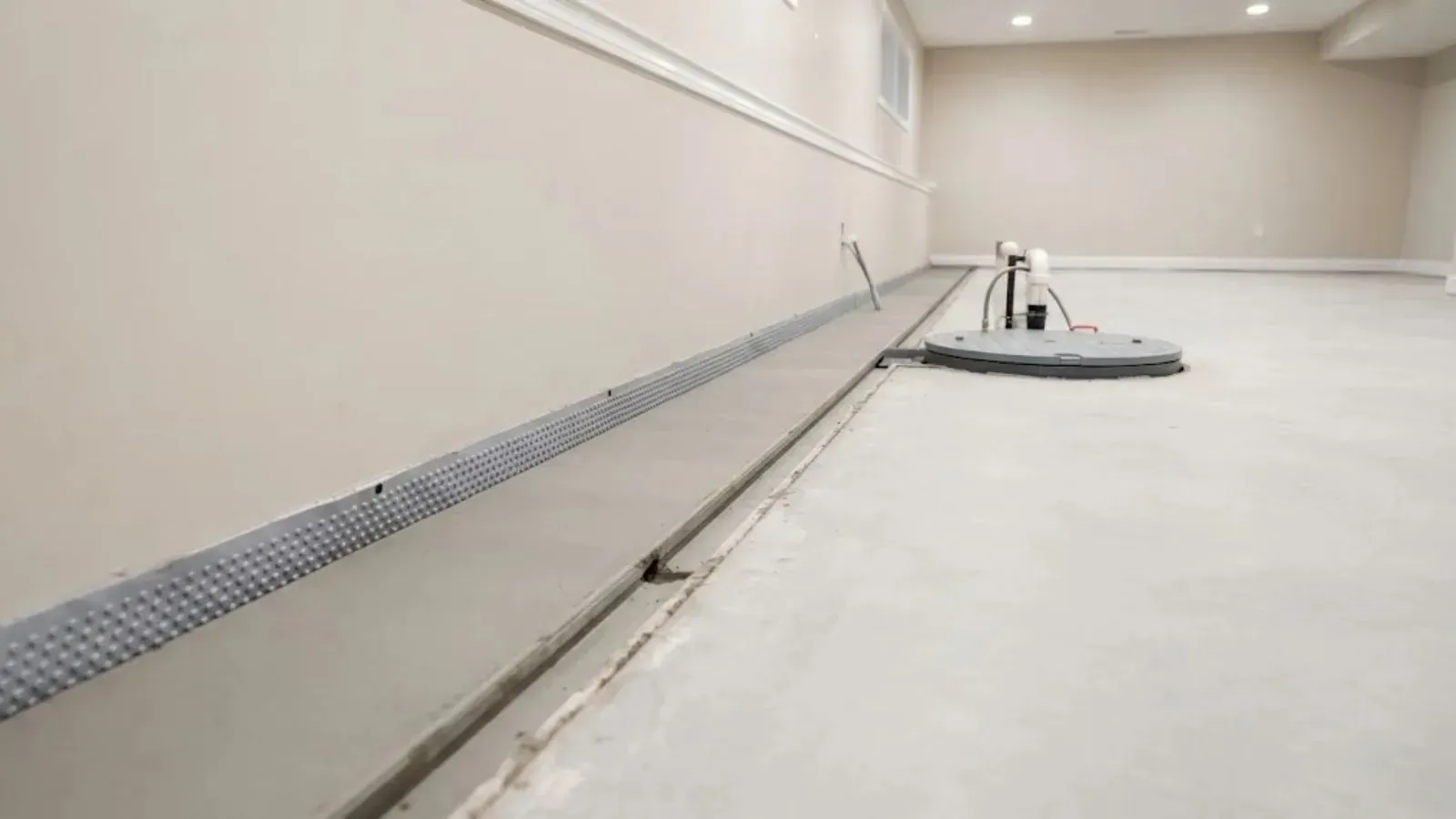
What waterproof baseboard does and does not do
PVC and composite baseboard do not absorb water, so they do not warp, rot or grow mold the way wood or MDF can. In a basement or a laundry room where the floor may get damp, that is a real advantage.
It does not stop water from entering. If moisture is wicking up the wall or seeping at the slab edge, waterproof trim only hides the symptom. The water will still affect the drywall, the paint and the framing behind it.
Where basement moisture comes from
Find the source before you choose a finish.
| Source | How to recognize it | Who fixes it |
|---|---|---|
| Plumbing leak in a wall or ceiling | Staining below a bathroom or near a pipe, a meter that moves | A plumber, see leak detection |
| Water heater or fixture leak | Water near the heater, washer or sink | A plumber |
| Condensation on cold pipes | Beads on pipes in warm months | Insulate the pipes |
| Groundwater through the wall or floor | Dampness after rain, efflorescence on the wall | A waterproofing or drainage contractor |
| Roof and gutter runoff | Wet spots near downspouts | Fix grading and downspouts |
| Humidity in the room | Musty smell without liquid water | A dehumidifier and ventilation |
Condensation and humidity are common in warm months and are often mistaken for leaks.
A quick test before you buy trim
These steps take less than an hour.
- STEP 01
Turn off all water
Make sure no fixture or appliance is running.
- STEP 02
Read the meter
Note the leak indicator and the register, wait fifteen minutes and read again.
- STEP 03
Check pipes and fixtures
Look under sinks and around the water heater for drips.
- STEP 04
Check after rain
If the dampness only follows rain, the cause is outside water.
- STEP 05
Call a plumber if the meter moves
A moving meter with all fixtures off means a leak somewhere between the meter and the fixtures.
Choosing a waterproof baseboard
If the moisture is solved and you want the trim, consider:
- A solid PVC or cellular PVC profile, not a coated wood product.
- A height and profile that match the rest of the trim.
- Adhesive and fasteners made for PVC, since expansion needs room.
- Caulk joints with a flexible sealant, not wood filler.
- A small gap at the floor so the trim does not wick moisture.
The trim can be installed after the leak is fixed and the wall is dry.
Mold and wet drywall
If drywall behind the baseboard has been wet for more than a day or two, mold may be growing even if you cannot see it. A musty smell, soft drywall or discoloration near the floor are signs.
Fixing the plumbing leak is the first step. Drying the wall and replacing wet drywall comes next. A restoration contractor handles that part, and a plumber handles the source of the water.
Huntersville note: leak checks and permits
Charlotte Water serves Huntersville, Cornelius and Davidson and its customer service line is 311 or 704-336-7600. If your bill has risen and your basement is damp, do a meter test, and call the utility if the leak seems to be at or before the meter.
Mecklenburg County Code Enforcement says plumbing installation, extension, alteration or general repair requires a permit. If a plumber must open a wall to fix a leak, ask whether a permit is needed by calling 980-314-2633.
Trim is not plumbing, but any pipe repair behind the wall follows the state plumbing code, the International Plumbing Code (IPC) with North Carolina amendments. Fix and test the pipe before you close the wall.
Cold pipes, warm air and false alarms
In humid months, cold water pipes can sweat, and the drips collect on the floor below. Homeowners often assume a leak. Wrapping the pipe in foam insulation stops the sweating and keeps the area dry.
If the pipe is dry and the floor is still wet, look further. A plumber can distinguish condensation from a leak in minutes, and the difference decides whether you need trim or a repair.
Damp lower levels in Cornelius
Lower levels in Cornelius homes can face the same moisture questions. See our Cornelius page for how we serve that town, and our service areas page for the others.
Drainage outside the house
Water that gathers near the foundation soaks the soil and finds its way inside. Gutters that overflow, downspouts that end at the wall and soil that slopes toward the house all add water to the foundation.
Extend downspouts away from the house, clear the gutters, and keep soil sloping away. These are inexpensive steps that reduce moisture before any trim or waterproofing is considered.
What a plumber can and cannot do
A plumber finds and repairs leaks in supply and drain lines. A plumber does not typically waterproof a foundation or repair a cracked wall. If the meter test shows no leak, you need a different trade.
A good plumber will tell you that, and point you toward a drainage or waterproofing contractor instead of selling you a repair you do not need.
The order that saves money
Find the source, fix the source, dry the area and then choose the finish. Skipping to the finish is the most common mistake. A homeowner who installs new trim and then finds a leak behind it pays twice.
A plumber can confirm whether a leak exists in an hour or two. That answer tells you whether you need a plumber, a drainage contractor or just trim.
Huntersville questions: Waterproof baseboard for basements
No. It resists damage from moisture, but it does not stop water from entering. Find the source first.
Turn off all water and see whether the meter still moves. A moving meter points to a leak in the pipes.
Most are PVC or a cellular PVC composite that does not absorb water.
No. Dry the wall, fix the leak and replace damaged drywall first.
A plumber for suspected leaks, and a drainage or waterproofing contractor for groundwater. Charlotte Water at 311 handles issues at the meter.
Trim alone usually does not. Plumbing work might. Call Mecklenburg County Code Enforcement at 980-314-2633.
Describe where the moisture shows and we will say whether a plumbing leak is likely. Call (704) 951-1635.