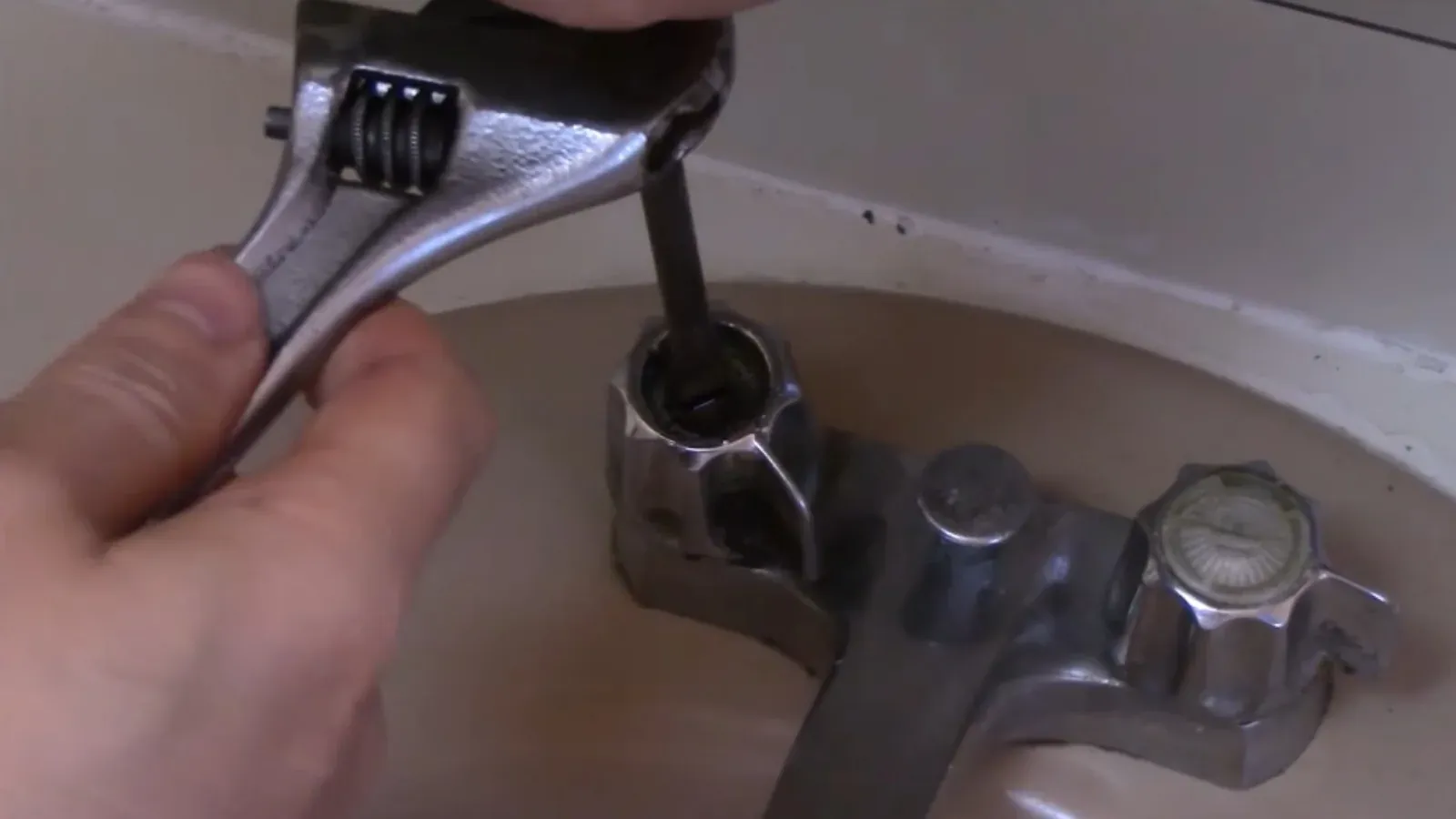
Where the water is coming from
A tub has a spout, a handle or two, a diverter that sends water to the showerhead and a drain with an overflow. A leak at any of them looks like a tub that will not stay dry, but the causes and the urgency differ.
Start by watching where the water appears. Drips from the spout point to the valve cartridge. Water around the handle points to the handle seal. Water at the wall around the spout points to a loose spout or a failed seal. A stain on the ceiling below means water is getting past the tub.
Leak location and the usual fix
Find your leak in the table and read across.
| Where it leaks | Likely cause | Typical fix | Urgency |
|---|---|---|---|
| Spout drips when off | Worn valve cartridge or washer | Replace the cartridge or seat | Soon, it wastes water |
| Water from the spout while the shower runs | Failed diverter | Replace the diverter spout | Low, but wasteful |
| Around the handle | Worn handle seal or stem | Replace the seal or cartridge | Soon |
| Where the spout meets the wall | Loose spout or failed caulk | Tighten, reseal | Soon, water enters the wall |
| Behind the access panel or the ceiling below | Valve body or supply line leak | Open and repair the line | Urgent |
| Around the drain and overflow | Failed gasket | Replace the drain gaskets | Soon |
A leak that appears only while the shower runs often means water is escaping where the tub meets the wall or at the diverter.
How a plumber diagnoses a tub leak
The process separates a simple repair from a hidden leak.
- STEP 01
Test each outlet
The plumber runs the tub spout, the shower and each handle position and watches where water appears.
- STEP 02
Check the access side
If there is an access panel behind the tub, it is opened to look at the valve and the pipes.
- STEP 03
Pressure test if needed
A hidden leak may be tested by isolating the supply lines and watching a gauge.
- STEP 04
Moisture check
A meter checks the wall and the ceiling below for moisture.
- STEP 05
Repair and verify
The failed part is replaced, and the area is retested before anything is closed.
Signs the leak is inside the wall
If you see these, stop using the tub and call:
- A stain or sagging drywall on the ceiling below the bathroom.
- A musty smell in the bathroom or the adjacent room.
- Soft or discolored flooring near the tub.
- Water on the floor after a shower with no visible source.
- Mold on the baseboard or the wall near the tub.
Dry the area and call. Water that has been in a wall for days can lead to mold, and the repair grows with the damage.
Handle and cartridge repairs
A tub faucet with one handle uses a cartridge that mixes hot and cold. If the faucet drips when closed, the cartridge seals have worn. A two-handle faucet uses a stem and a washer or cartridge at each handle.
Both repairs start by shutting off the water to the bathroom and removing the handle. If the shutoff valves do not close, the main shutoff is the next step. A plumber can usually finish in an hour, and the cartridge is not an expensive part.
Why a small leak gets expensive
A drip at the spout costs only water. A drip inside the wall costs framing, drywall and finish. The difference is time. A bathroom leak that runs unnoticed for months can rot a subfloor and leave a stain on the ceiling that was not there last week.
If you are unsure, shut off the water to the tub at the stop valves or the main and call. Our leak detection page explains how to check a hidden leak without opening the wall.
Huntersville note: permits and who may repair
Mecklenburg County Code Enforcement says that permits are required for the installation, extension, alteration or general repair of plumbing systems. Whether a simple cartridge swap needs a permit depends on the scope, and the office at 980-314-2633 can tell you. A repair that opens the wall or moves pipes is more likely to need one.
North Carolina requires a license to engage in plumbing contracting. Check the plumber at public.nclicensing.org, the license search run by the State Board of Examiners of Plumbing, Heating and Fire Sprinkler Contractors, and ask who pulls the permit.
Tub and shower valves, drains and overflows are installed to the state plumbing code, the International Plumbing Code (IPC) with North Carolina amendments. If a valve must be replaced, the new one should match the code and the maker's rough-in.
Caulk, grout and the tub surround
Not every wet spot near a tub is a faucet leak. Failed caulk at the tub edge and cracked grout in a tiled wall let shower spray into the wall, and the stain appears below the tub just like a pipe leak.
Test by running the tub faucet without the shower and then the shower without the tub faucet. If the stain only grows with the shower, the surround is the likely cause. A plumber will tell you which trade you need.
Bathroom leaks in Cornelius
Cornelius homes use the same tub valves and have the same hidden-leak risk. Our Cornelius page describes how we serve that town, and the service areas page lists the others.
Insurance and documentation
If a tub leak has damaged the ceiling or the floor, photograph the damage and the source before anyone cleans up. Many homeowners policies cover sudden water damage but not the failed fixture itself, and they may exclude long-term seepage.
Keep the plumber's written findings and the date of the repair. If a claim is needed, those papers show when the leak was found and what was done.
Huntersville questions: Tub faucet leak repair
The cartridge or washer has worn. Replacing it stops most drips.
The diverter has failed. Replacing the diverter spout or the diverter valve fixes it.
A drip is not. Water in the ceiling below, soft flooring or a growing stain is, so shut off the water and call.
Often yes. Cartridge, handle and spout repairs usually need no wall access. A leaking valve body or a pipe in the wall does.
It depends on the scope. Mecklenburg County Code Enforcement at 980-314-2633 can tell you whether your repair needs one.
A plumber uses a moisture meter, an access panel and sometimes a pressure test. We explain the process on our leak detection page.
Tell us where the tub leaks and we will tell you how urgent it is. Call (704) 951-1635.